


Space weather warnings could be received hours before Earth is hit rather than minutes with the help of a miniature UK-built instrument soon to be stationed in deep space.
MAGIC (MAGnetometer from Imperial College) is part of the European Space Agency's Heliospheric Pioneer for Solar and Interplanetary Threats Defence (HENON) CubeSat mission, which is scheduled for launch in early 2027.
By measuring the Sun's magnetic field much farther upstream than current real-time space weather monitors, the mission aims to extend advance warning of severe solar storms from just tens of minutes to several hours.
The research is being presented at the Royal Astronomical Society's National Astronomy Meeting this week in Birmingham by Jonathan Eastwood, Professor of Space Physics in the Department of Physics (Blackett Laboratory) at Imperial College London.
"I am really excited to be working on the HENON mission because it paves the way for a dramatic improvement in our ability to respond to severe space weather," said Professor Eastwood.

Space weather is caused by activity on the Sun, including solar flares and coronal mass ejections (CMEs) – huge eruptions of magnetised plasma that travel through space. When these eruptions reach Earth, they can trigger geomagnetic storms capable of disrupting satellites, communications, navigation systems and power grids.
While scientists can already forecast when a CME is likely to arrive at Earth, predicting how severe its effects will be is much more difficult. That depends on the magnetic field carried by the eruption, which can only be measured directly as it travels through space.
At present, operational space weather forecasts rely on spacecraft positioned at the Sun-Earth L1 Lagrange point, around 1.5 million kilometres from Earth. For the fastest CMEs, this gives forecasters only around 15 minutes' warning time.
HENON will take a different approach. The CubeSat will travel to a special orbit that carries it to around 15 million kilometres upstream of Earth – ten times farther from Earth than L1 – allowing it to sample the solar wind much earlier.
"From a technology point of view, this is an exciting mission because it will be the first time that our miniaturised MAGIC instrument will fly in deep space, measuring the interplanetary magnetic field," said Professor Eastwood.
MAGIC, developed at Imperial College London and funded by the UK Space Agency, will measure the magnetic field within the solar wind as it streams away from the Sun. Together with two other instruments designed by scientists in the Czech Republic and Finland, MAGIC will provide the measurements needed to test whether earlier and more accurate space weather forecasting is possible.
If successful, HENON could extend advance warning of the most severe geomagnetic storms by a factor of ten, from around 15 minutes to two or three hours, giving satellite operators, power grid managers and other users much more time to prepare for the effects of major space weather events.
"The success of HENON will be a step change in our ability to forecast space weather, and paves the way for a future operational space weather mission, SHIELD, that is being developed by the European Space Agency," said Professor Eastwood.
The SHIELD mission would provide continuous early warning of potentially hazardous solar storms much farther upstream than current spacecraft.
HENON is a technology demonstration mission managed by the European Space Agency (ESA) and is scheduled to launch in early 2027 as a secondary payload on the same rocket as ESA's PLATO mission.
ENDS
Media contacts
Sam Tonkin
Royal Astronomical Society
Mob: +44 (0)7802 877 700
Dr Robert Massey
Royal Astronomical Society
Mob: +44 (0)7802 877 699
Megan Eaves
Royal Astronomical Society
Science contacts
Jonathan Eastwood
jonathan.eastwood@imperial.ac.uk
Images and captions
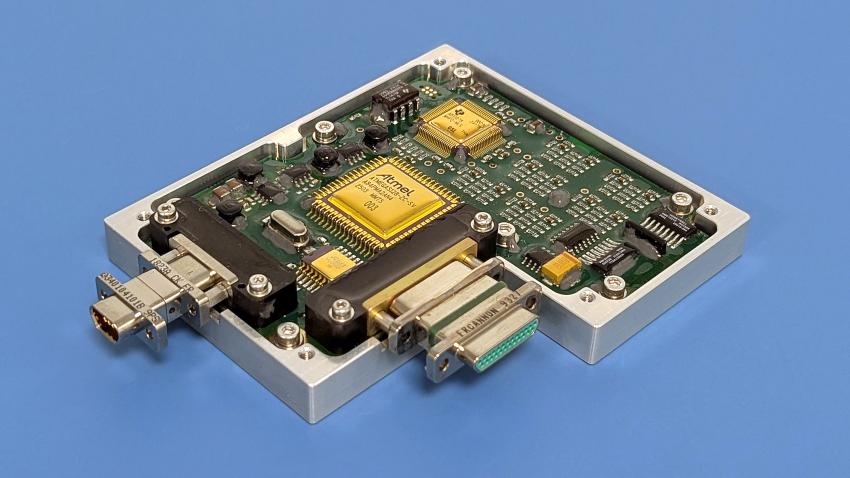
Image 1: Photograph of the MAGIC instrument. This is the flight instrument that has just been finished and will soon be sent for integration into HENON. It is missing the sensor, which is attached by a wire and will be mounted on a deployable boom.
https://drive.google.com/file/d/15MDF3Zh-Y8TsIlopBF0oGqKhyK-wGsSO/view?usp=drive_link
Credit: Harry Lewis/ Imperial College London
Figure 1: Illustration of the Distant Retrograde Orbit for HENON mission operations.
https://drive.google.com/file/d/1AExrz2P2pTzK9yJpapfAZkoGXjDTr2UF/view?usp=drive_link
Credit: ESA/Argotec
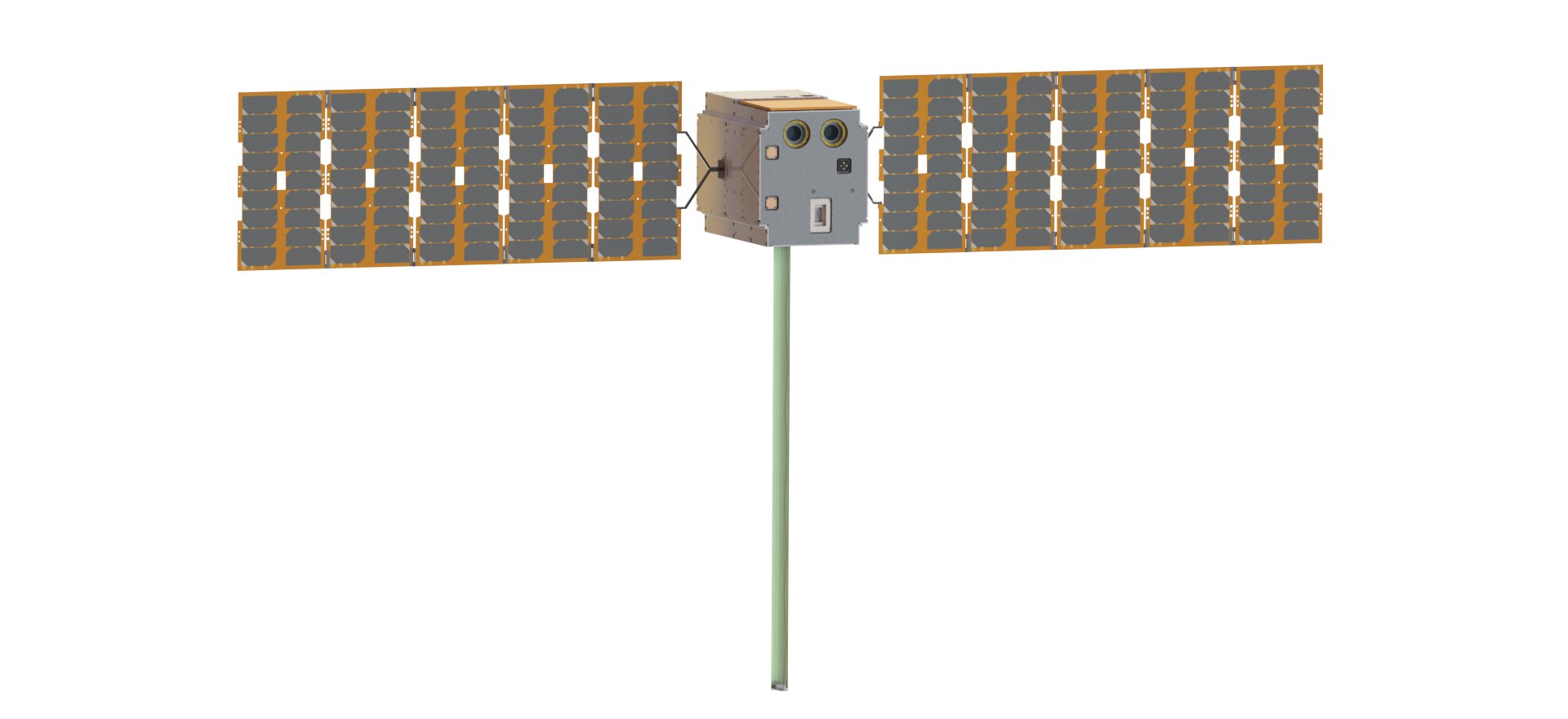
Figure 2: Illustration of HENON, ESA's first-ever stand-alone deep space CubeSat mission.
https://drive.google.com/file/d/1evpzDYN42oV5K2W9QBoHUQxALGeC6Yql/view?usp=drive_link
Credit: ESA
Figure 3: Illustration of HENON flying close to the Sun.
https://drive.google.com/file/d/1H8FtRz6h0ChXZ5J1xY-i5dMjWe9r3VzM/view?usp=drive_link
Credit: ESA
Further information
- MAGIC (MAGnetometer from Imperial College) is one of three scientific instruments on HENON. The other payloads are a solar wind instrument developed in the Czech Republic and an energetic particle instrument developed in Finland. Its development is supported by the UK Space Agency through ESA's General Support Technology Programme.
- HENON will operate around 0.1 AU (approximately 15 million kilometres) upstream of Earth, around ten times farther from Earth than the current L1 space weather monitoring point.
- HENON's final destination will be a Distant Retrograde Orbit (DRO) around the Sun – an orbit similar to but more elliptical than that of the Earth, first invented by French astronomer Michel Hénon in 1969.
- The mission – Michel Hénon's namesake – will be the first ever spacecraft to fly in this type of orbit, which will take it 12 million km from Earth at its closest point, and 24 million km away at the farthest. As both Earth and HENON will be orbiting the Sun, their relative orbits will make for an interesting situation – HENON will appear as if it's orbiting Earth in the shape of an ellipse instead.
- Severe space weather is listed on the UK National Risk Register because of its potential impacts on critical infrastructure, including satellites, power networks and communications systems.
- HENON is a European Space Agency technology demonstration mission led by Argotec (Italy) designed to test new approaches to space weather monitoring rather than an operational forecasting mission.
The talk ‘Enhanced space weather forecasting through access to sub-L1 solar wind magnetic field measurements by the HENON technology demonstration CubeSat’ took place at NAM2026 at 09:30 BST on Monday 20 July 2026 in room TLC118/119. Find out more at: https://uobevents-national-astronomy-meeting-2026.eventsairsite.com/block-schedule.
Notes for editors
About the Royal Astronomical Society
The Royal Astronomical Society (RAS), founded in 1820, encourages and promotes the study of astronomy, solar-system science, geophysics and closely related branches of science.
The RAS organises scientific meetings, publishes international research journals, recognises outstanding achievements by the award of medals and prizes, maintains an extensive library, supports education through grants and outreach activities and represents UK astronomy nationally and internationally. Its more than 4,000 members (Fellows), a third based overseas, include scientific researchers in universities, observatories and laboratories as well as historians of astronomy and others.
The RAS accepts papers for its journals based on the principle of successful peer review, following which experts on the Editorial Boards accept the papers for publication. The Society issues press releases based on a similar principle, but the organisations and scientists concerned have overall responsibility for their content.
Keep up with the RAS on Instagram, Bluesky, LinkedIn, Facebook and YouTube.
Download the RAS Supermassive podcast
About the Science and Technology Facilities Council
The Science and Technology Facilities Council (STFC), part of UK Research and Innovation (UKRI), is the UK’s largest public funder of research into astronomy and astrophysics, particle and nuclear physics, and space science. We operate five national laboratories across the UK which, supported by a network of additional research facilities, increase our understanding of the world around us and develop innovative technologies in response to pressing scientific and societal issues. We also facilitate UK involvement in a number of international research activities including the ELT, CERN, the James Webb Space Telescope and the Square Kilometre Array Observatory.
About The University of Birmingham
The University of Birmingham is ranked amongst the world's top 100 institutions. Its work brings people from across the world to Birmingham, including researchers, educators and more than 40,000 students from over 150 countries.
England’s first civic university, the University of Birmingham, is proud to be rooted in one of the most dynamic and diverse cities in the country. A member of the Russell Group and a founding member of the Universitas 21 global network of research universities, the University of Birmingham has been changing the way the world works for more than a century.
The University of Birmingham is committed to achieving operational net zero carbon. It is seeking to change society and the environment positively, and use its research and education to make a major global contribution to the UN Sustainable Development Goals. Find out more about our approach to sustainability.